As an Amazon Associate we earn from qualifying purchases. Learn more.
Down vs Synthetic Sleeping Bags for Spring & Early Summer (2026)
Spring and early-summer trips bring fluctuating temperatures and occasional damp nights — conditions that expose the strengths and limits of down and synthetic sleeping bags. This head-to-head refresh compares three TETON TrailHead sleeping-bag variants (two premium microfiber versions and one budget polyester option) to show how synthetic designs perform for temperate-season campers. You’ll get a quick verdict, direct product comparisons, and a detailed buying guide that walks through warmth, weight, packability, durability, and care. Products were selected for their popularity in the spring/early-summer niche, differing price tiers, and the real-customer feedback on warmth, fit, and value.
Quick Answer
For spring and early-summer camping, synthetic bags are usually the smarter choice because they handle damp, compressible packdown, and dry faster. Our top pick is the TETON Sports TrailHead (ASIN B00TZRPQFI) for combining lightweight packability with durable microfiber insulation.
Our Top Picks
Quick Comparison
Select 2-3 products to compare side-by-side
| Compare | Product | GearGavel Score | Price Tier | Key Feature | Best For | Action |
|---|---|---|---|---|---|---|
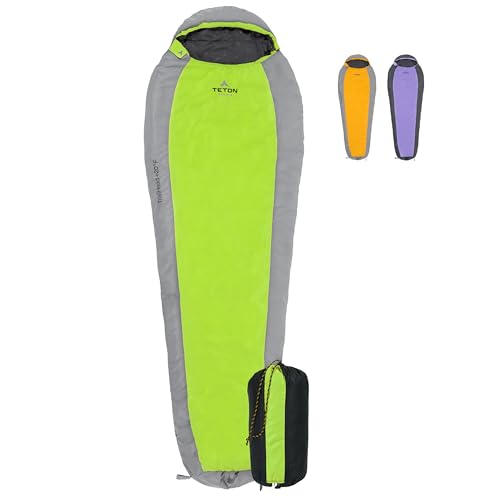 TETON TrailHead (B00TZRPQFI)
|
Premium | Microfiber insulation with high loft | Backpackers wanting warm, compressible synthetic | Check Price | ||
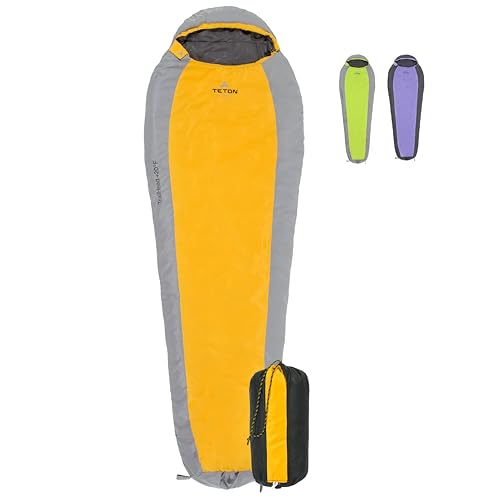 TETON TrailHead (B007JTLKCC)
|
Premium | Lightweight fill that packs down well | Campers who want a balance of comfort and value | Check Price | ||
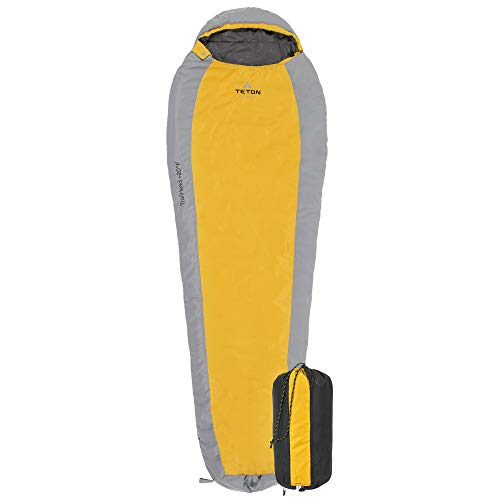 TETON TrailHead (B0744D97JR)
|
Budget | 100% polyester shell with anti-snag zippers | Budget-conscious campers and casual car campers | Check Price |
1. Teton 20F and 5F Degree Sleeping Bag; Lightweight, Warm Weather Mummy Sleeping Bags for Adults and Kids, Camping, Backpacking, Hiking
A microfiber-insulated mummy bag that balances warmth, compressibility and comfort for spring and early-summer use. Fluffed loft and a double-brushed liner make it comfortable on a variety of pads; its design focuses on warmth retention while staying relatively lightweight.
Key Specs
- Fill: Microfiber insulation
- Liner: Breathable, soft double-brushed lining
- Shape: Mummy with hood and zipper draft tube
- Extras: Durable compression sack included
- Safety: Survival rated to +20°F; comfort rating higher
Pros
- Warmer damp-night performance than the polyester Budget Pick
- Better pack compressibility than the budget model thanks to microfiber loft
- More comfortable liner and hood design than the lower-cost variant
Cons
- Mixed fit reports — some find it roomy while others say it's small
- Zipper quality has occasional complaints compared with more expensive premium competitors
Best For: Backpackers wanting warm, compressible synthetic
Check Latest Price on Amazon2. Teton 20F and 5F Degree Sleeping Bag; Lightweight, Warm Weather Mummy Sleeping Bags for Adults and Kids, Camping, Backpacking, Hiking
Very similar to the top-listed TrailHead with microfiber fill and roomy footbox, this variant focuses on comfort and compressibility. It shares the same practical features (hood, zipper draft tube, stuffing method) and is a good mid-to-premium option when you want reliable synthetic performance.
Key Specs
- Fill: Microfiber insulation
- Liner: Soft-to-the-touch liner for comfort
- Shape: Roomy footbox and mummy hood
- Pack: Comes with a stuff sack for compressing
Pros
- Generally more comfortable fit than the Budget Pick for many users
- Comparable warmth to the other microfiber variant at a similar weight
- Good balance of compressibility and loft versus budget polyester
Cons
- Some users report zipper durability issues similar to other TrailHead variants
- Fit is inconsistent across users — sizing can feel small to some
Best For: Campers who want a balance of comfort and value
Check Latest Price on Amazon3. Teton 20F and 5F Degree Sleeping Bag; Lightweight, Warm Weather Mummy Sleeping Bags for Adults and Kids, Camping, Backpacking, Hiking
The budget TrailHead option uses polyester construction with anti-snag zippers and a roomy footbox. It’s the most affordable way into TETON’s TrailHead family, giving acceptable warmth and comfort for spring nights, though it sacrifices some compressibility and damp-weather performance vs microfiber models.
Key Specs
- Shell/Fill: 100% Polyester
- Zipper: Anti-snag zippers for easier operation
- Shape: Mummy bag with roomy footbox
- Extras: Includes a stuff sack; hang loops for storage
Pros
- Lower price tag than both microfiber variants
- Anti-snag zipper is easier to use than some competing budget bags
- Good value for casual car-campers vs higher-priced microfiber models
Cons
- Less compressible and slower to dry than microfiber options
- Durability of materials and seams not as robust as the premium microfiber models
Best For: Budget-conscious campers and casual car campers
Check Latest Price on AmazonWhich One Should You Choose?
If budget is tight → Choose the TETON TrailHead polyester variant (ASIN B0744D97JR). It gives the lowest price and easy-to-use anti-snag zippers — ideal for car camping and short trips. If you need portable → Choose the microfiber TrailHead (ASIN B00TZRPQFI). Its microfiber insulation packs down smaller and retains loft better when damp, making it a better pick for backpackers and multi-night spring trips. If premium comfort & consistent performance matters → Choose either microfiber TrailHead (ASIN B00TZRPQFI or B007JTLKCC) with the B00TZRPQFI build as our top overall pick for its blend of loft, liner comfort, and included compression sack.
Best for Specific Scenarios
- Backpacking with variable weather: TETON TrailHead (B00TZRPQFI) because microfiber insulation dries faster and keeps warmth when damp.
- Weekend car camping or kid-friendly trips: TETON TrailHead (B0744D97JR) because it’s the most budget-friendly and has anti-snag zippers for easy use.
- Lightweight comfort without premium down care: TETON TrailHead (B007JTLKCC) because it balances compressibility and a soft liner for multi-night comfort.
Frequently Asked Questions
Is down or synthetic better for spring camping?
Synthetic is generally better for spring because it retains loft when damp, dries faster, and is lower-maintenance in variable conditions. Down can be warmer-for-weight when dry, but requires more protection from moisture or water-resistant treatments.
How do temperature ratings translate to comfort?
Temperature labels are guides: 'survival' or 'comfort' ranges depend on sleep clothing, shelter, and sleep system (pad insulation). For spring use, err on the side of a slightly warmer bag if you tend to sleep cold; pairing any bag with an insulated pad raises comfort significantly.
Can I machine-wash these TrailHead sleeping bags?
Yes — synthetic and microfiber TrailHead bags are machine-washable on gentle cycles with mild detergent; use low-heat drying or air-dry. Follow the manufacturer care instructions to protect loft and zippers. Avoid regular high-heat drying which can damage insulation.
How We Selected These Products
Our recommendations are based on data-driven analysis: we evaluated 86177+ products across 8512+ brands using a composite scoring system that weighs rating (40%), review volume (30%), price value (20%), and demand signals (10%). Every product is ranked by data, not opinions.
Last updated: May 20, 2026
As an Amazon Associate we earn from qualifying purchases at no extra cost to you. Full disclosure.
GearGavel Score is our editorial ranking based on a composite analysis of product quality, value, and verified customer sentiment. Click through to Amazon for current pricing, availability, and live customer reviews.