As an Amazon Associate we earn from qualifying purchases. Learn more.
How to Pick a Tent for Windy Spring Conditions (2026)
Spring brings melting snow, sudden storms and sustained gusts — and many tents that work in summer struggle when wind and wet return. This guide helps campers pick tents that resist gusts, manage condensation and stay usable in changeable spring weather. We evaluated stability features (pole materials, guy points, low profile), fabric strength and waterproofing, plus real-customer feedback on fit, durability and weight. The selections below prioritize tents that solve the core problems of windy spring conditions: staying anchored, shedding wind loads and keeping you dry and ventilated.
Quick Answer
For windy spring conditions the CORE Tent for Family Camping (B016N7DFMI) is the best overall choice for car camping thanks to roomy, well-sealed construction and adjustable vents that reduce lift and condensation. For lightweight, wind-resilient backpacking choose the Naturehike Cloud-Up Pro (B0D31F6PBB); the budget Naturehike options (B0DJX7RT3H, B0D6F5JDXT) deliver value with solid pole systems and included footprints.
Our Top Picks
Quick Comparison
Select 2-3 products to compare side-by-side
| Compare | Product | GearGavel Score | Price Tier | Key Feature | Best For | Action |
|---|---|---|---|---|---|---|
 CORE Family Dome Tent
|
Premium | Roomy center, H20 Block tech & vents | Car camping families needing shelter in wind | Check Price | ||
 Naturehike Cloud-Up Pro (20D)
|
Premium | 20D silicone nylon, 4000mm waterproof | Backpackers who need a light, windproof shelter | Check Price | ||
 Naturehike Cloud-Up (210T)
|
Budget | 210T polyester with PU3000mm | Budget backpackers seeking weather protection | Check Price | ||
 Naturehike Cloud-Up (210T alt)
|
Budget | Budget 210T polyester with footprint | Weekend hikers and value-conscious campers | Check Price |
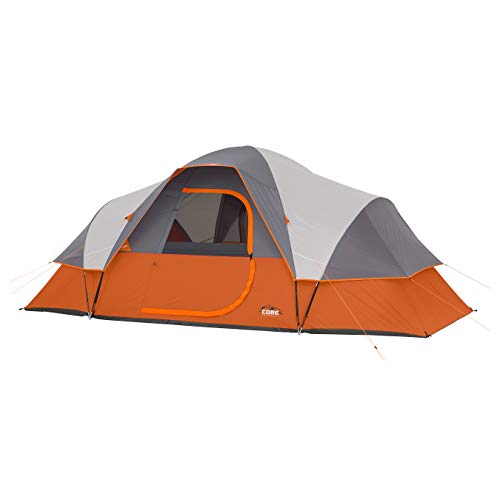
1. CORE Tent for Family Camping, Hiking and Backpacking | 3 Person / 4 Person / 6 Person / 9 Person Dome Camp Tents with Included Tent Gear Loft for Outdoor Accessories
The CORE tent solves windy-spring problems by combining a roomy, low-slung dome with adjustable ground vents and H20 Block water resistance to manage wind-driven rain and condensation. Its large footprint and included stake points make anchoring straightforward; however, fiberglass poles are lighter on cost than aluminum, so pay attention to strong guying in sustained high winds.
Key Specs
- Sleeps up to 9; fits three queen air mattresses
- Center height: 72 inches
- CORE H20 Block Technology; adjustable ground vent
- Traditional fiberglass poles; included rain fly, stakes, gear loft
Pros
- Spacious interior reduces gear-clutter that can flap in gusts
- Adjustable vents and taped seams help manage condensation and moisture
- Well-appointed accessories (gear loft, electrical port) for car camping
Cons
- Fiberglass poles are more prone to breakage in severe gusts
- Heavier and bulkier to carry if you plan to hike to the site
Best For: Car camping families needing shelter in wind
Check Latest Price on Amazon2. Naturehike Cloud-Up 2 Person Tent Lightweight Backpacking Tent with Footprint - Free Standing Ultralight Camping Hiking Backpack Tents Two Person Tent
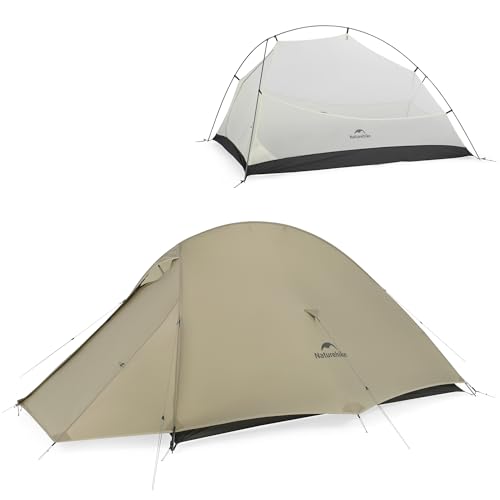
Built with 20D silicone-coated nylon and 7001 aluminum poles, this Cloud-Up Pro balances ultralight weight with a strong pole system and high hydrostatic head for heavy spring showers. Double-layer design and added ventilation reduce fly flapping and condensation; included footprint and guy lines let you stake and tension the tent securely in gusty conditions.
Key Specs
- 20D nylon with silicone coating; waterproof 4000mm+
- Weight ~3.97 lbs; packed small
- 7001 aluminum poles; double-layer design with vestibule
- Footprint, stakes and wind ropes included
Pros
- High waterproof rating and reinforced poles resist wind-driven rain
- Very light and compact for multi-day trips
- Double-layer design improves airflow and reduces flapping
Cons
- Interior can feel tight for two taller campers
- Delicate 20D fabric needs careful handling around sharp branches
Best For: Backpackers who need a light, windproof shelter
Check Latest Price on Amazon3. Naturehike Cloud-Up 2 Person Tent Lightweight Backpacking Tent with Footprint - Free Standing Ultralight Camping Hiking Backpack Tents Two Person Tent
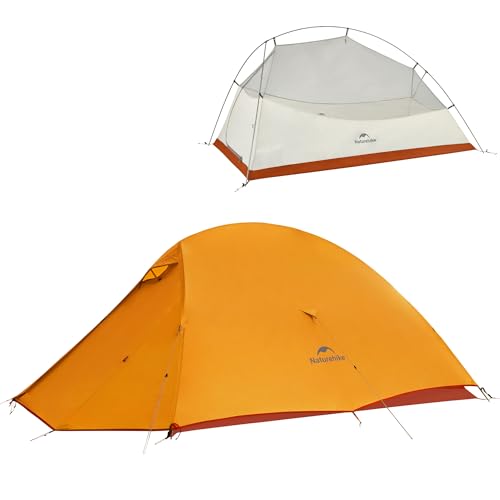
This budget Cloud-Up uses 210T polyester with a 3000mm waterproof coating and 7001 aluminum poles to give dependable wind and rain protection without a high price. It includes a footprint and wind ropes, making it easy to tension and stabilize in spring gusts; trade-offs are slightly higher weight and mixed feedback on interior space.
Key Specs
- 210T polyester with waterproof PU coating; 3000mm+
- Weight ~4.25 lbs; tent size 82.7"L x 49.2"W x 41.3"H
- 7001 aluminum alloy poles; taped seams
- Double-layer design with vestibule; footprint included
Pros
- Excellent value for the protection and included accessories
- 7001 aluminum poles offer good stiffness in wind
- Footprint and vestibule help keep gear dry
Cons
- Smaller interior for two; some users find it tight
- Polyester coating is less abrasion-resistant than higher-denier nylons
Best For: Budget backpackers seeking weather protection
Check Latest Price on Amazon4. Naturehike Cloud-Up 2 Person Tent Lightweight Backpacking Tent with Footprint - Free Standing Ultralight Camping Hiking Backpack Tents Two Person Tent
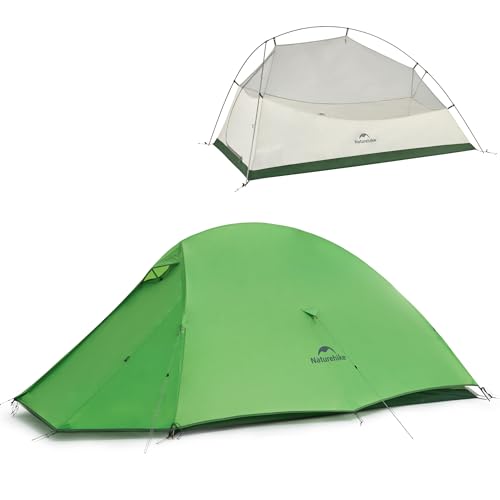
This version mirrors the practical, budget-focused Cloud-Up line: taped seams, a rainfly, and 7001 poles make it capable in spring winds and rain at a low price. It solves common spring problems by including a footprint and guy lines so you can anchor and tension the shelter, though interior space and warmth get mixed feedback from users.
Key Specs
- 210T polyester with waterproof coating; PU3000mm+
- 7001 aluminum poles; taped seams
- Double-layer inner with mesh for ventilation; footprint included
- Tent size 82.7"L x 49.2"W x 41.3"H
Pros
- Affordable protection with solid pole hardware
- Footprint included for extra ground protection
- Quick to set up and pack down
Cons
- Some campers find it cramped for two
- Warmth and insulation are limited in cold spring nights
Best For: Weekend hikers and value-conscious campers
Check Latest Price on AmazonWhich One Should You Choose?
If budget is tight → Naturehike Cloud-Up (B0DJX7RT3H) gives the best value for spring wind protection. If you need a lightweight, packable shelter for exposed ridgelines → Naturehike Cloud-Up Pro 20D (B0D31F6PBB) balances low weight with strong poles and a high waterproof rating. If you want roomy, comfortable car camping and features that reduce wind/condensation problems at a site → CORE Tent (B016N7DFMI) is the most practical premium choice.
Best for Specific Scenarios
- Family car camping in gusty spring weather: CORE Tent (B016N7DFMI) because its roomy interior, adjustable vents and full-coverage fly let you secure a stable base and keep everyone dry.
- Lightweight multi-day backpacking on exposed trails: Naturehike Cloud-Up Pro 20D (B0D31F6PBB) because silicone-coated 20D nylon and 7001 aluminum poles provide a strong, compact shelter that handles wind-driven rain.
- Weekend trips on a budget with variable wind: Naturehike Cloud-Up 210T (B0DJX7RT3H or B0D6F5JDXT) because they include footprints, taped seams and solid poles at a lower price.
Frequently Asked Questions
How do I make a tent hold up better in strong spring winds?
Stake and guy every recommended point, position the narrow end of the tent into prevailing winds, tension the rainfly tightly, and use additional guy lines if needed. Choose a sheltered pitch (behind a berm or low vegetation) and reduce surface area by closing vents when wind-driven rain is the main threat; reopen vents when safe to manage condensation.
Are aluminum poles necessary for windy spring conditions?
Aluminum poles (7000-series) are strongly recommended for repeated exposure to gusts because they bend rather than snap and have higher fatigue resistance than fiberglass. If a tent uses fiberglass, compensate with extra guylines, lower profile pitching and careful site selection.
What fabric and waterproof ratings matter for rainy, windy spring trips?
Look for taped seams and a hydrostatic head of at least 3000mm for routine spring rain; 4000mm+ gives extra margin for prolonged downpours. Silicone-coated 20D nylon balances weight and water resistance; 210T polyester is heavier but durable and often better on a budget. Also check that the rainfly covers the tent fully and that the tent includes a footprint to prevent ground moisture and abrasion.
How We Selected These Products
Our recommendations are based on data-driven analysis: we evaluated 86177+ products across 8512+ brands using a composite scoring system that weighs rating (40%), review volume (30%), price value (20%), and demand signals (10%). Every product is ranked by data, not opinions.
Last updated: May 20, 2026
As an Amazon Associate we earn from qualifying purchases at no extra cost to you. Full disclosure.
GearGavel Score is our editorial ranking based on a composite analysis of product quality, value, and verified customer sentiment. Click through to Amazon for current pricing, availability, and live customer reviews.